The Silence Showdown: We Tested Three Popular Sound-Blocking Methods Against the Noises That Actually Ruin Your Day
America is loud. Whether you live in a Brooklyn apartment above a restless German Shepherd, a suburban home flanked by a leaf-blower enthusiast, or an open-plan office where every phone call becomes communal property, unwanted noise is a near-universal grievance. The market has responded with three dominant solutions: active noise-canceling (ANC) headphones, passive foam earplugs, and white noise machines. Each carries its own promises, price points, and loyal advocates.
But which one actually works — and for what?
At R10 Review, we set aside the marketing language and conducted structured evaluations across four common noise scenarios: neighborhood dog barking, street traffic, conversational office chatter, and late-night neighbor disturbances. Our goal was not to produce a decibel chart, but to answer the more practical question: when you need relief, which tool should you reach for?
Understanding What You Are Actually Trying to Block
Before comparing solutions, it helps to understand that sound is not monolithic. Acoustic engineers categorize noise by frequency — low-frequency sounds like rumbling traffic, bass-heavy music, or a neighbor's HVAC system behave entirely differently from high-frequency sounds like a dog's bark, a smoke alarm, or a coworker's phone conversation.
This distinction matters enormously, because each sound-blocking method excels in a different frequency range. Purchasing the wrong solution for your specific noise problem is one of the most common — and most preventable — consumer errors in this category.
Noise-Canceling Headphones: Sophisticated, but Selective
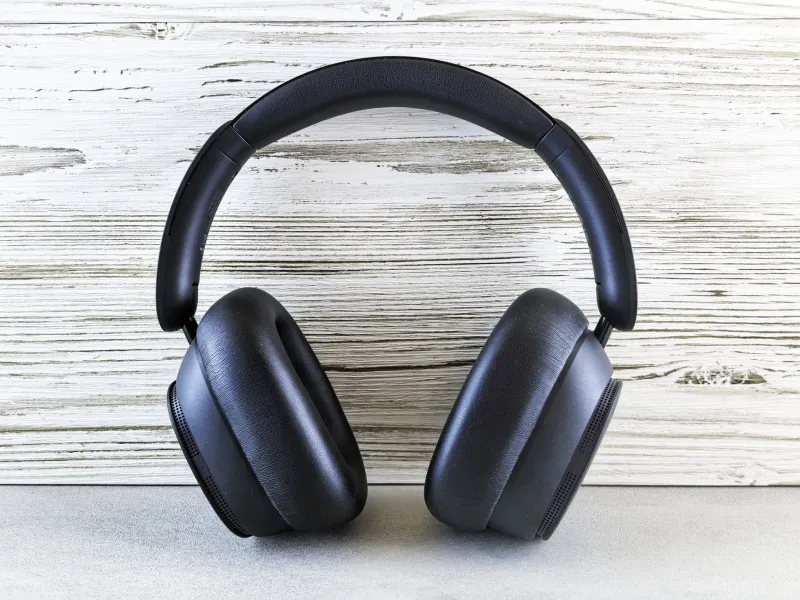
Active noise-canceling technology works by using onboard microphones to sample ambient sound and generate an inverse audio signal that effectively cancels it out. The technology is genuinely impressive, and premium models from Sony, Bose, and Apple have made it accessible to a wide consumer audience.
In our evaluations, ANC headphones performed best against consistent, low-to-mid frequency noise. Street traffic — the steady drone of cars, buses, and urban ambient hum — was reduced dramatically. Wearing a quality ANC headset on a busy Manhattan street or near a highway felt like stepping into a quieter room. For commuters, open-plan office workers, or anyone who works near an HVAC system, this is a compelling case.
However, ANC headphones showed meaningful limitations against sharp, irregular, high-frequency sounds. A dog barking in short, unpredictable bursts was only partially muffled. The technology requires a fraction of a second to process and counter incoming sound; sudden, staccato noises frequently slip through before the cancellation can engage. Human speech — particularly at conversational volumes — was reduced but not eliminated. For those hoping to disappear entirely from an open office, the results were mixed at best.
Additional considerations: ANC headphones require charging, cost anywhere from $30 to over $400, and are impractical for sleeping. They are tools best suited to waking, stationary, or commuting contexts.
Foam Earplugs: Underestimated and Underpriced
Foam earplugs occupy an unusual space in this conversation. They are among the least glamorous consumer products imaginable — a pair costs less than a dollar — yet they consistently outperform far more expensive alternatives in specific scenarios.
Passive ear protection works through physical sound attenuation: the foam compresses, expands within the ear canal, and creates a seal that blocks sound waves from reaching the eardrum. Unlike ANC technology, foam earplugs do not discriminate by frequency. They attenuate broadly, which means they are particularly effective against high-frequency sounds that give ANC headphones trouble.
In our testing, properly inserted foam earplugs produced the most dramatic reduction in dog barking of any solution tested. They also performed admirably against neighbor noise and conversational chatter. For light sleepers living in urban environments, a quality pair of high-NRR (Noise Reduction Rating) foam earplugs — rated at 33 dB, the highest commonly available — may be the single most effective tool available.
The limitations are equally significant, however. Foam earplugs are uncomfortable for extended wear and nearly impossible to sleep in for some users. They muffle all sound, meaning important cues — an alarm, a child calling out, a knock at the door — are compromised along with the unwanted noise. They are also a single-use product in most applications, which creates ongoing cost and waste for daily users.
For situational use — a noisy flight, a night in a hotel near a busy street, a single loud event — foam earplugs remain one of the most cost-effective solutions in existence.
White Noise Machines: The Masking Approach
White noise machines operate on an entirely different principle. Rather than blocking or canceling sound, they introduce a consistent broadband audio signal — often resembling static, rain, or fan noise — that acoustically masks competing sounds by reducing the signal-to-noise contrast your brain registers.
This is a meaningful distinction. A white noise machine does not make your environment quieter; it makes the intrusive sounds less noticeable by narrowing the perceptual gap between silence and disturbance.
In our testing, white noise machines excelled in sleep and relaxation contexts. When positioned near a bedroom door or window, a mid-range white noise machine effectively softened the impact of neighbor conversations, hallway noise in apartment buildings, and even intermittent dog barking. The effect was not elimination but normalization — the barking became less jarring because the baseline audio environment was no longer silent.
For households with infants, light sleepers, or anyone working from home in a shared living situation, white noise machines offer a low-effort, always-on solution that requires no wearing, no charging, and no fitting. Quality units from LectroFan and Marpac retail between $30 and $80 — a reasonable one-time investment.
The approach does have limits. White noise is not effective in high-noise environments; it cannot mask a party next door or a construction crew outside your window. It also requires a level of personal tolerance — some users find continuous white noise itself disruptive after extended periods.
Matching the Method to the Problem
Based on our evaluations, the most useful framework is not which solution is best overall, but which solution is best for your specific acoustic problem:
-
For commuting, office work, or consistent low-frequency ambient noise: Active noise-canceling headphones are the clear choice. Their ability to neutralize the steady drone of traffic, airplane engines, and HVAC systems is unmatched.
-
For sleeping in noisy environments or blocking sharp, irregular sounds like barking: High-NRR foam earplugs offer the most raw attenuation per dollar. For those who can tolerate the fit, they remain uniquely effective.
-
For creating a better sleep environment or working from home with shared walls: A white noise machine provides a passive, wearable-free solution that improves the acoustic baseline of an entire room without requiring anything of the user beyond pressing a button.
The Bottom Line
No single solution wins across all scenarios. That is perhaps the most important finding from this evaluation. Consumers who purchase a $350 ANC headset expecting it to solve a barking dog problem at 2 a.m. will be disappointed. Those who rely on foam earplugs during a commute will miss their podcast and arrive with sore ears.
The most acoustically comfortable households tend to deploy these tools in combination — white noise machines as a nightly baseline, foam earplugs for acute disruptions, and ANC headphones for daytime focus. Together, these three solutions cover the full spectrum of common noise problems at a combined cost that, in many cases, remains well under $150.
The next time a neighbor's dog — or anything else — tests your patience, the right tool is the one built for that specific problem. Know your noise, and spend accordingly.