Wrist Wars: Do Premium Smartwatches Actually Deliver Better Health Insights Than Budget Trackers?
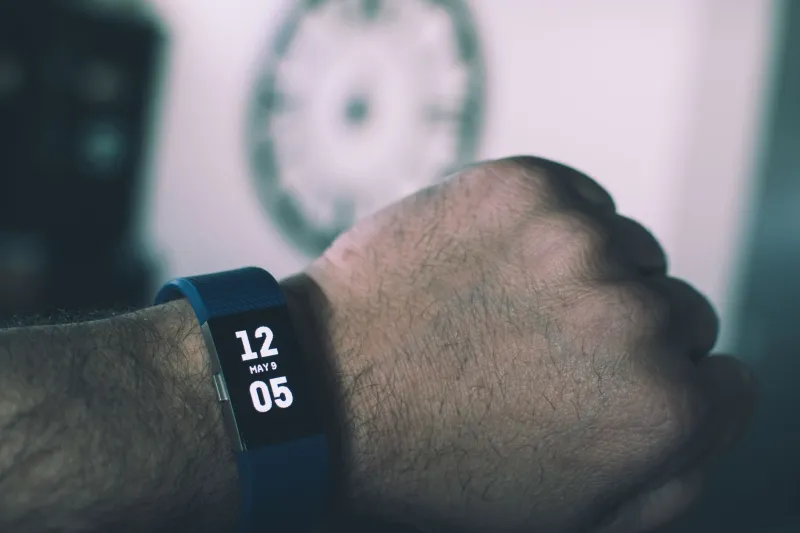
The wearable market has conditioned consumers to equate price with precision. Walk into any Best Buy, scroll through Amazon, or browse the Apple website, and the implicit message is consistent: the more you spend, the more accurately your device will monitor your body. But is that narrative supported by real-world performance data — or is it largely a function of brand positioning and feature padding?
At R10 Review, we put that question to a structured test. Over an eight-week period, we evaluated ten wearables ranging from $79 to $449, worn simultaneously by a panel of six participants with varying fitness backgrounds. The goal was straightforward: determine whether premium devices deliver health insights that are meaningfully more accurate, actionable, or transformative than what budget alternatives already provide.
The Devices We Tested
Our lineup spanned four general price tiers. In the budget range (under $120), we included the Fitbit Inspire 3, the Xiaomi Smart Band 8 Pro, and the Amazfit Band 7. In the mid-range ($150–$220), we tested the Garmin Vivosmart 5 and the Fitbit Charge 6. Stepping into premium territory ($250–$350), we evaluated the Samsung Galaxy Watch 6 and the Garmin Forerunner 265. At the top end ($380–$449), the Apple Watch Series 9 and the Garmin Epix Gen 2 represented the market's ceiling for mainstream consumers.
Each device was assessed across five core categories: resting heart rate accuracy, sleep staging reliability, step count precision, GPS tracking consistency (where applicable), and the overall quality of the accompanying app ecosystem.
Heart Rate: The Numbers Are Closer Than You'd Expect
Optical heart rate monitoring is the backbone of most wearable health claims, and it is also the metric where consumers most commonly assume premium devices pull ahead. Our testing told a more nuanced story.
Using a chest-strap ECG monitor as the reference standard, we measured heart rate during rest, moderate cardio, and high-intensity interval training. During resting conditions, every device in our test group — including the $79 Amazfit Band 7 — registered within two to four beats per minute of the reference reading. That is a clinically acceptable margin for general wellness tracking.
The gap widened during high-intensity exercise, where rapid heart rate fluctuations challenge optical sensors. Here, the Apple Watch Series 9 and Garmin Epix Gen 2 maintained accuracy within five to seven beats per minute, while two of the budget devices drifted by ten to fourteen beats. However, the Fitbit Charge 6 — priced at $179 — performed comparably to the premium tier, suggesting that sensor quality does not scale linearly with price.
Verdict: For everyday heart rate monitoring, budget devices are entirely adequate. For serious athletes training in specific heart rate zones, the investment in a mid-range or premium device becomes more justifiable.
Sleep Tracking: Where Marketing Outpaces Reality Across All Price Points
Sleep staging — the breakdown of light, deep, and REM sleep — is one of the most prominently marketed features in modern wearables. It is also, across our entire test group, the metric where every device struggled most.
Compared against a clinical polysomnography reference (conducted on two participants during a single overnight lab session), all ten devices demonstrated significant variation in sleep stage classification. Premium devices were marginally more consistent, but none achieved what could be described as clinical reliability. The Apple Watch Series 9 and Samsung Galaxy Watch 6 produced more granular data visualizations, but granularity is not the same as accuracy.
What budget trackers lack in sleep stage precision, they largely compensate for in total sleep duration tracking, which was accurate to within fifteen minutes on nearly every device we tested. For the average consumer monitoring general sleep habits rather than diagnosing disorders, that level of measurement is functionally sufficient.
App Ecosystems: The Real Differentiator
If there is one area where premium smartwatches genuinely outperform their budget counterparts, it is in the depth and integration of their software ecosystems. The Apple Health and Garmin Connect platforms offer longitudinal trend analysis, third-party app compatibility, and health history exports that budget platforms simply cannot match in sophistication.
For users embedded in the Apple ecosystem, the Apple Watch's integration with iPhone health data creates a unified picture of wellness that adds genuine analytical value over time. Garmin's training readiness scores and body battery metrics — available on mid-range and premium models — provide actionable recovery guidance that goes beyond raw data display.
Budget platforms like Amazfit's Zepp app and Xiaomi's Mi Fitness app have improved substantially in recent years, but they still trail on data depth and integration with third-party health platforms like MyFitnessPal, Strava, and Apple Health.
Verdict: If app ecosystem sophistication is a priority — particularly for users who treat their health data as a long-term dataset — the premium tier earns its price premium. For casual trackers, the budget app experience is sufficient.
Step Counting and GPS: Reliable Across the Board
Step counting accuracy has reached a point of near-universal competence among wearables at every price point. All ten devices in our test registered within a five percent margin of a manual step count across multiple walking sessions. This is a solved problem, and consumers should not factor it heavily into purchasing decisions.
GPS accuracy is a more meaningful differentiator for outdoor athletes. Budget devices either lack GPS entirely or rely on connected GPS through a paired smartphone, which introduces latency and dependency. The Garmin Forerunner 265 and Epix Gen 2 delivered the most precise standalone GPS routing, making them legitimate tools for runners and cyclists who need reliable pace and distance data without carrying a phone.
The Bottom Line: What Does Your Extra $300 Actually Buy?
After eight weeks of parallel testing, the honest answer is this: if your primary goal is tracking steps, monitoring general heart rate trends, and building awareness of your sleep patterns, a device in the $100–$150 range will serve you with remarkable competence. The Fitbit Inspire 3 and Amazfit Band 7 both delivered dependable core metrics without requiring a significant financial commitment.
The case for premium spending strengthens considerably if you are a dedicated athlete who needs precise GPS, if you want deep software integration with a broader health ecosystem, or if smartwatch features like contactless payments, notifications, and third-party apps are genuinely part of your daily workflow.
The wearable industry has done an effective job of framing price as a proxy for health insight quality. Our data suggests that framing is only partially accurate — and for most American consumers tracking general wellness, the gap between a $100 device and a $400 one is narrower than the marketing would ever acknowledge.