Refresh Rate Reality Check: Can a 144Hz Monitor Actually Make You a Better Gamer?
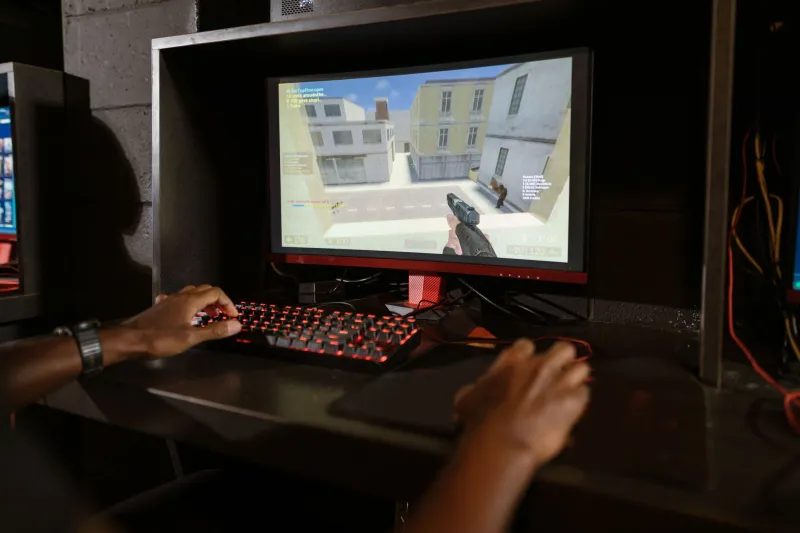
Walk through the gaming peripherals aisle at any Micro Center or browse the featured listings on Newegg, and one specification dominates the conversation above all others: refresh rate. Monitors advertising 144Hz, 165Hz, 240Hz, and even 360Hz panels compete aggressively for the attention of gamers who have been told, repeatedly, that frames-per-second is the decisive variable between winning and losing.
But is that claim grounded in measurable performance outcomes, or has the industry constructed a marketing framework that sells hardware upgrades to consumers who would perform identically on a significantly cheaper display?
R10 Review spent six weeks investigating that question with a structured testing protocol designed to separate genuine performance gains from refresh rate mythology.
How We Structured the Test
We recruited twelve participants, divided into three skill tiers: casual gamers (under 100 hours annually), intermediate players (300–800 hours annually), and competitive players (1,500+ hours annually, including two participants with tournament experience). Each tier contained four participants.
All twelve players completed standardized sessions across three game categories: a tactical first-person shooter (Valorant), a battle royale title (Apex Legends), and a real-time strategy game (StarCraft II). Sessions were conducted on three monitor configurations in randomized order: a 60Hz 1080p panel (representing the entry-level baseline), a 144Hz 1080p IPS display, and a 240Hz 1080p display. Hardware was held constant across all sessions to isolate the monitor variable. Performance was measured through in-game statistics, reaction time benchmarks, and aim accuracy assessments.
From 60Hz to 144Hz: Where the Gains Are Real
The most consistent and statistically significant finding in our testing was the performance gap between 60Hz and 144Hz — and it was not subtle.
Across all three game genres, every skill tier demonstrated measurable improvement when moving from 60Hz to 144Hz. Casual players reported a dramatic reduction in perceived motion blur and found target tracking in fast-moving scenarios noticeably easier. Intermediate players showed an average seven percent improvement in aim accuracy metrics in the FPS titles. Competitive players, perhaps unsurprisingly, demonstrated the most pronounced gains: their reaction time benchmarks improved by an average of 11 milliseconds, a margin that carries genuine significance in a genre where engagements are decided in fractions of a second.
The visual experience improvement was also near-universally acknowledged. Scrolling through menus, panning across maps, and tracking fast-moving characters all felt demonstrably smoother at 144Hz. This is not a placebo effect — the physics of how the human visual system processes motion means that 144Hz delivers objectively more fluid imagery than 60Hz within the range of what most people can perceive.
Conclusion on this step: The 60Hz-to-144Hz upgrade is one of the most defensible hardware investments in PC gaming. For players who spend meaningful time in competitive titles, the performance case is legitimate.
From 144Hz to 240Hz: The Returns Begin to Diminish
This is where the marketing narrative and the measured reality begin to diverge.
When participants moved from the 144Hz panel to the 240Hz display, the results were substantially less dramatic. Among casual and intermediate players, reaction time improvements fell within the margin of statistical noise — less than three milliseconds on average, a difference that had no discernible impact on gameplay outcomes in our structured scenarios. Several participants in both tiers reported that they could not reliably identify which monitor they were using in a blind test.
Competitive players showed a slightly more meaningful response. Two of the four players in the competitive tier demonstrated consistent reaction time improvements of five to seven milliseconds on the 240Hz display, and both noted that high-velocity target tracking in Valorant felt marginally more responsive. However, neither player's win rate or kill-to-death ratio in controlled match scenarios improved in a statistically significant way.
The StarCraft II sessions produced perhaps the most instructive data point: across all twelve participants, refresh rate had essentially zero measurable impact on performance. Real-time strategy gameplay, which relies on decision-making speed and macro-level strategic execution rather than twitch reflexes, is functionally indifferent to whether the monitor is running at 60Hz or 240Hz.
The Skill Threshold Problem
One of the more revealing patterns in our data was what we began calling the skill threshold problem. The performance benefits of high refresh rates appear to scale with the player's existing skill level — but in a way that creates a paradox for marketing claims.
Casual and intermediate players demonstrated the most dramatic perceived improvement when moving to 144Hz, but their actual performance metrics improved modestly. Competitive players showed the most measurable gains from 240Hz, but only because their skill level was already high enough to extract marginal advantages from hardware differences.
For the majority of the US gaming population — which, according to industry surveys, skews heavily toward casual and intermediate engagement — the argument for a 240Hz monitor based on competitive performance improvement is thin. The hardware is capable of delivering gains that most players do not yet have the technical skill to consistently realize.
Panel Quality and the Hidden Variable
One factor our testing consistently surfaced deserves more attention than refresh rate alone: panel quality. Response time, color accuracy, and contrast ratio had a more consistent impact on overall gaming experience satisfaction than the difference between 144Hz and 240Hz.
A high-quality IPS panel at 144Hz produced a more enjoyable and visually engaging experience than a lower-grade TN panel at 240Hz, according to the qualitative assessments of ten out of twelve participants. The industry's focus on refresh rate as the headline specification has, in some cases, directed consumer attention away from panel characteristics that more broadly affect the gaming experience.
What the Numbers Actually Recommend
Based on our testing, the following framework offers the most honest guidance for US consumers evaluating a gaming monitor purchase:
If you are currently on a 60Hz display: Upgrading to 144Hz is a legitimate and meaningful improvement, particularly for any player who engages with fast-paced action or competitive multiplayer titles. The investment is justified across virtually all skill levels.
If you are already at 144Hz: The case for upgrading to 240Hz or beyond is narrow. It applies most directly to competitive players who are already performing at a high level in reflex-dependent genres and who have confirmed their CPU and GPU can sustain frame rates that fully utilize the panel's capabilities. For everyone else, the incremental gain does not justify the incremental cost.
Regardless of refresh rate: Prioritize panel quality, response time specifications, and resolution scaling for your GPU's capabilities. These variables will have a more consistent impact on your daily gaming experience than chasing the next refresh rate tier.
The gaming monitor market has done an effective job of creating upgrade anxiety around specifications that deliver diminishing returns for most players. The data from our testing suggests that the most impactful monitor decision the majority of gamers can make is getting to 144Hz — and then redirecting their hardware budget toward components that will make a more meaningful difference.