Pain, Posture, and Price Tags: Six Weeks of Office Ergonomics Testing Across Three Budgets
The word "ergonomic" has become one of the more elastically applied terms in consumer product marketing. It appears on $39 keyboards and $600 keyboards alike. It accompanies desk chairs that cost less than a tank of gas and chairs that approach the price of a used vehicle. The implicit promise is consistent across all of them: this product will reduce your pain, improve your posture, and make your working hours more sustainable.
R10 Review spent six weeks testing that promise across three complete office ergonomics setups, assembled at distinct budget tiers, with six adult participants who work desk jobs averaging seven to nine hours per day. Our methodology combined daily pain journals, weekly posture assessments, and participant interviews to separate functional ergonomic benefit from branding.
How We Built the Three Setups
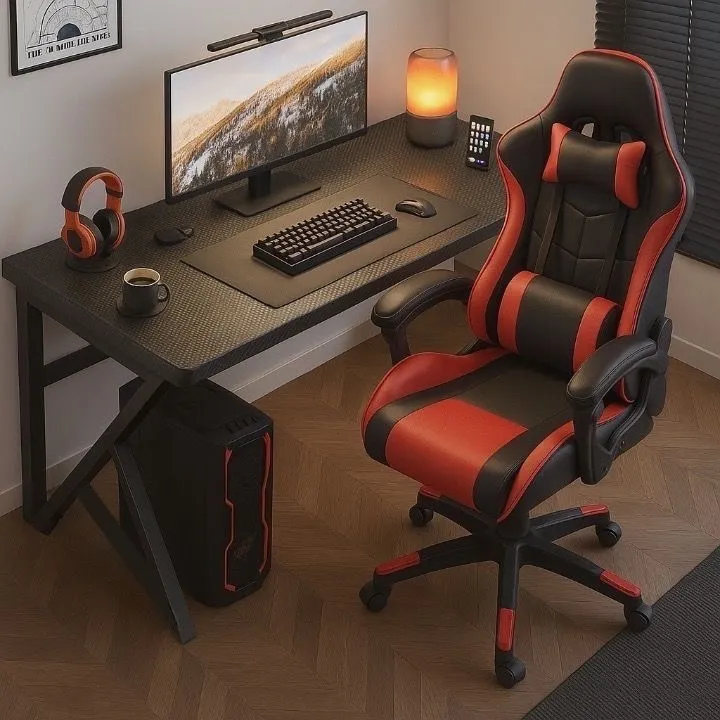
Each setup was designed as a complete workstation intervention: chair, monitor arm or stand, keyboard, mouse, and footrest where applicable. We did not test individual products in isolation, because real ergonomic benefit — or the absence of it — emerges from how components interact within a complete working environment.
The budget tier targeted a total outlay under $300. The mid-range tier sat between $600 and $900. The premium tier exceeded $1,500, incorporating chairs with lumbar adjustment systems, height-adjustable monitor arms with tension control, and split ergonomic keyboards. Participants were rotated through each setup across two-week intervals, with a one-week washout period between transitions to reduce carry-over bias.
What the Pain Journals Revealed
Participants logged discomfort on a ten-point scale across five body regions — lower back, upper back and neck, shoulders, wrists, and hips — at the end of each working day. The aggregate data across six weeks produced some expected findings and several that challenged our assumptions.
Lower back discomfort showed the most consistent improvement as setup quality increased. Participants reported a mean reduction of 2.1 points on the discomfort scale when transitioning from the budget to the premium chair, with lumbar support adjustability identified as the primary contributing factor. This finding held across all six participants regardless of body type or prior back condition.
Wrist and forearm discomfort, however, showed a more complicated pattern. The split ergonomic keyboard in the premium setup produced an initial spike in wrist fatigue during the first three to four days as participants adapted to the unfamiliar key layout. By the end of the two-week period, four of the six participants reported lower wrist discomfort than they had experienced with either alternative setup. Two participants never fully adapted and reported higher discomfort throughout.
This is a critical consumer insight: ergonomic tools that require behavioral adaptation carry a transition cost. If you purchase a split keyboard and abandon it after two days because it feels awkward, you have paid premium pricing for a product you will not use. Adaptation period is a real factor that marketing materials consistently omit.
The Monitor Positioning Finding
Perhaps the most practically significant result from our six weeks of testing had nothing to do with price tier. It had to do with monitor height.
In the budget setup, monitors sat on fixed-height stands. In the premium setup, they were mounted on fully adjustable arms. When we asked participants to set their own monitor positions at the start of each two-week period, every single participant in the budget condition positioned their screen too low — an average of 3.2 inches below the clinically recommended eye-level position. Neck and upper back discomfort scores were measurably higher in the budget condition than in either alternative.
The mid-range setup used a basic adjustable monitor stand that allowed height modification within a limited range. Participants were able to position screens closer to the recommended height, and neck discomfort scores dropped accordingly — to levels comparable with the premium setup.
The takeaway here is direct: if you are going to prioritize one ergonomic investment, a monitor at the correct height delivers disproportionate benefit relative to cost. A mid-range adjustable stand at $45 to $80 may accomplish more for neck and upper back health than a premium chair at $800, depending on your specific pain profile.
Where the Premium Price Premium Is and Is Not Justified
After six weeks of structured data collection, the R10 Review editorial team reached a differentiated conclusion. Premium pricing is most defensible in two areas: lumbar-adjustable seating and monitor positioning hardware. These two components produced consistent, participant-verified improvements in comfort that the budget alternatives could not replicate.
Premium pricing is least defensible in footrests and wrist rests, where we observed no statistically meaningful difference in participant comfort between the budget and premium versions. The materials differed. The branding differed. The comfort outcomes did not.
Keyboards occupy a middle position. The split ergonomic design in the premium setup showed genuine benefit for participants who adapted to it — but that adaptation requirement creates real consumer risk. A mid-range ergonomic keyboard with a conventional layout but improved key travel and wrist angle may represent a more reliable investment for most users.
Practical Guidance for the American Desk Worker
The average American office worker spends more than 1,700 hours per year seated at a desk. At that volume, the cumulative physical cost of a poorly configured workstation is not trivial, and the case for ergonomic investment is legitimate. But the case for premium ergonomic investment across every product category is not supported by our data.
A strategic mid-range approach — prioritizing an adjustable chair with genuine lumbar support, a monitor arm or adjustable stand, and a conventional ergonomic keyboard — delivers most of the measurable benefit of a premium setup at roughly 40 to 50 percent of the cost. The remaining budget, if available, is better spent on professional ergonomic assessment than on premium product tiers.
Ergonomics works. The science is sound. But the price gradient in the consumer market does not map neatly onto the gradient of physical benefit. Knowing the difference is what makes the investment rational.