The Coverage Verdict: Five Home Layouts, Two Router Technologies, and One Clear Answer About What Your House Actually Needs
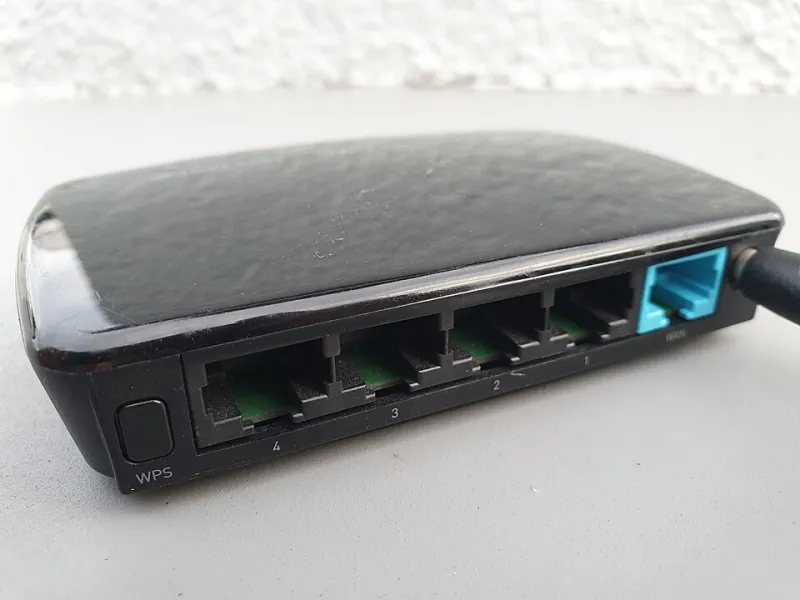
Photo: Syced, CC0, via Wikimedia Commons
Every router box promises seamless whole-home coverage. Every mesh system advertisement shows a glowing sphere of connectivity enveloping a beautiful, obstruction-free house. Neither of those depictions bears much resemblance to the split-level ranch in suburban Ohio, the narrow Brooklyn brownstone, or the sprawling single-story Arizona build where most Americans actually live.
At R10 Review, we structured this evaluation around one foundational question: at what point does a mesh WiFi system become a genuine necessity rather than an expensive convenience? To answer it, we selected five representative home layouts spanning roughly 900 to 3,400 square feet, deployed both a traditional high-performance router and a mid-tier mesh system in each, and spent four weeks collecting signal strength readings, throughput data, and latency measurements from fixed and mobile test points throughout every property.
The findings were, in several cases, the opposite of what we anticipated.
How We Structured the Testing
Our five test environments were selected to represent common American housing stock rather than architectural edge cases. They included a 950-square-foot single-floor apartment with concrete-and-steel construction, a 1,600-square-foot two-story colonial with standard wood-frame walls, a 2,200-square-foot open-concept ranch, a 2,800-square-foot split-level with a finished basement, and a 3,400-square-foot two-story home with a detached garage workshop.
For the traditional router category, we used a current-generation Wi-Fi 6 unit retailing between $180 and $220, positioned at the location most homeowners would realistically choose — near the primary cable or fiber entry point. For the mesh category, we tested a three-node Wi-Fi 6 system in the $280 to $320 range, placing nodes according to the manufacturer's recommended spacing guidelines.
Signal strength was logged at 22 fixed measurement points per home. Download and upload throughput were tested using a consistent methodology at each point during both peak and off-peak usage hours. Latency was measured for gaming and video conferencing simulations. We also tracked connection handoff behavior — how smoothly devices transitioned between nodes — during a standardized walking path through each property.
Where Traditional Routers Still Win
The 950-square-foot apartment produced the test's most decisive result, and it favored the traditional router by a meaningful margin. In that compact, single-floor environment, the high-performance router delivered faster peak throughput at every measurement point and maintained lower average latency throughout. The mesh system's multi-node architecture introduced a modest but measurable overhead in that context, and the signal from a single well-positioned router penetrated the space adequately despite the concrete construction.
The 1,600-square-foot two-story colonial told a similar story, with one important caveat. When the traditional router was positioned on the ground floor near the modem, upper-floor speeds dropped by roughly 35 percent compared to ground-floor readings — a consistent but not catastrophic degradation. For households where the majority of bandwidth-intensive activity occurs on one floor, the traditional router remained the more cost-efficient choice. For families distributing workloads across both levels, the mesh system's performance advantage on the upper floor became harder to dismiss.
The open-concept ranch at 2,200 square feet was the most instructive test environment of the five. With minimal interior walls and a single-story layout, a properly positioned Wi-Fi 6 router delivered coverage that matched the mesh system's performance across roughly 80 percent of the floor plan. Only the far corners of the property — a rear bedroom and a garage-adjacent laundry room — showed meaningful signal degradation. The practical implication: if your home shares this layout profile, a traditional router supplemented by a single wired access point or a Wi-Fi extender may represent better value than a full mesh system.
Where Mesh Systems Justify Their Price
The split-level with a finished basement was the test case that most clearly illustrated the mesh system's structural advantage. Traditional routers struggle with vertical complexity — floors stacked at partial offsets, load-bearing walls at irregular angles, and HVAC infrastructure that disrupts signal propagation in ways that are difficult to predict. In this environment, the traditional router produced dead zones in the basement that rendered video streaming unreliable and made video conferencing essentially nonfunctional. The mesh system, with one node placed on the main level and a second in the basement, eliminated those dead zones entirely and delivered consistent throughput throughout the property.
The 3,400-square-foot two-story home with the detached garage workshop represented the most unambiguous case for mesh adoption. At that scale, no single-router deployment — regardless of price point or antenna configuration — maintained adequate coverage across the full footprint. The mesh system's three-node setup achieved workable signal strength in the garage workshop, the far end of the second floor, and the backyard patio area adjacent to the primary structure. The traditional router simply could not serve those locations from any single placement position without leaving significant portions of the home underserved.
The Price-to-Performance Threshold
Based on our testing data, a practical threshold begins to emerge around 2,000 square feet — but square footage alone is an incomplete guide. Layout complexity and vertical distribution matter as much as raw floor area. A 2,400-square-foot single-story home with open sightlines may be adequately served by a quality traditional router. A 1,800-square-foot split-level with a finished basement may genuinely require a mesh system to function reliably.
The cost differential between a premium traditional router and an entry-level mesh system has narrowed considerably in recent years. Spending $200 on a capable Wi-Fi 6 router versus $300 on a two-node mesh kit is a $100 decision, not a $400 one. At that price gap, the calculus shifts toward the mesh system for any home where layout complexity or square footage creates meaningful doubt about single-router coverage.
Where the math becomes less favorable to mesh systems is at the premium tier. Three-node systems from flagship brands regularly retail above $500, and our testing found no scenario in which that expenditure outperformed a mid-tier mesh system by a margin that would justify the additional cost for the average household.
What the Data Actually Recommends
For homes under 1,500 square feet on a single floor: a quality traditional Wi-Fi 6 router remains the most rational purchase. Allocate your budget toward a better router rather than a mesh system you do not need.
For homes between 1,500 and 2,500 square feet with standard two-story layouts: evaluate your specific floor plan before committing. If your primary usage areas cluster near the router's ideal placement position, a traditional router with a supplemental access point may suffice. If usage is genuinely distributed across floors and rooms, a two-node mesh system is likely the cleaner solution.
For homes exceeding 2,500 square feet, split-level configurations, or properties with detached structures you intend to cover: mesh systems are not a luxury in these contexts — they are the appropriate tool for the problem. A mid-tier three-node system will outperform any single-router solution in these environments, and the performance gap in our testing was not marginal.
Router marketing has long outpaced router reality. The value of this kind of structured, layout-specific testing is precisely that it replaces coverage diagrams with coverage data — and data, as it turns out, rarely looks like the diagrams on the box.