Pixel by Pixel: What Fifteen Webcams Across Six Price Tiers Actually Taught Us About the Camera on Your Desk
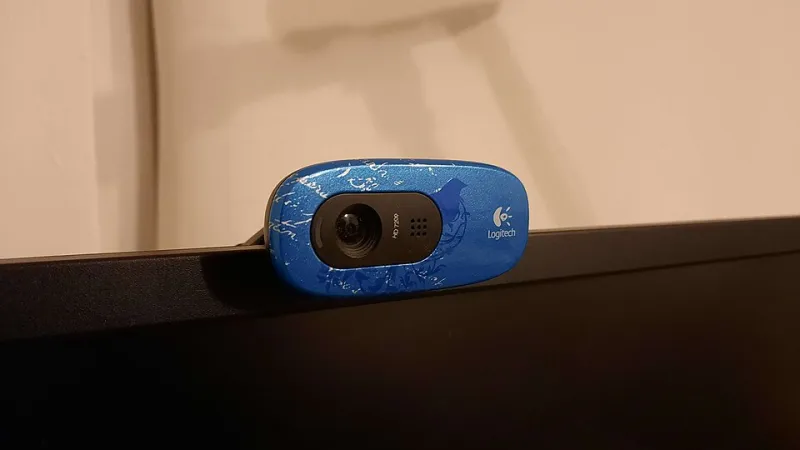
Photo: Peter Placzek, CC BY-SA 4.0, via Wikimedia Commons
The modern American workspace has quietly become a broadcast studio. Whether you are joining a Monday morning standup from a home office in suburban Ohio or streaming a live gaming session to an audience of thousands, the camera mounted above your monitor is no longer a peripheral afterthought—it is the first impression you make on everyone watching. Yet webcam pricing remains one of the more confusing corners of consumer electronics, with models ranging from $39 to well over $350 occupying the same product category pages with surprisingly similar specification sheets.
To cut through the noise, R10 Review acquired and tested fifteen webcams across six defined price tiers over the course of eight weeks. Every model was evaluated under controlled and real-world conditions by the same panel of reviewers using the same hardware baseline. The goal was straightforward: determine precisely where spending more money translates into a meaningfully better experience, and where it simply translates into a more recognizable logo on the front of the device.
How We Structured the Test
The fifteen cameras were divided into six tiers: sub-$50, $50–$100, $100–$150, $150–$200, $200–$300, and $300-plus. Each webcam was assessed across five performance categories—image clarity, low-light performance, built-in audio quality, software feature depth, and physical build construction. Scores in each category were assigned independently before being combined into a composite rating.
Testing environments included a bright, naturally lit home office; a dimly lit room with a single overhead bulb; a backlit scenario simulating a window behind the subject; and an outdoor-adjacent setting near a sliding glass door. Video calls were conducted over Zoom, Microsoft Teams, and Google Meet. Streaming scenarios were tested through OBS Studio at standard broadcast settings. The panel logged observations blind to retail pricing during initial assessments to minimize bias.
The Sub-$50 Reality
Let us be direct: cameras in this range perform adequately for occasional use and little else. The three models we tested at this price point delivered acceptable 1080p output in ideal lighting conditions—meaning a bright room with the light source in front of your face and no competing background complexity. The moment lighting conditions shifted, however, image quality degraded noticeably. Grain, color inaccuracy, and autofocus lag became persistent issues rather than occasional inconveniences.
Built-in microphones at this tier are, without exception, a fallback option rather than a genuine solution. Audio captured background noise aggressively, and voice reproduction lacked the warmth and clarity that professional communication requires. If your primary use case is a weekly family video call or an occasional HR check-in, these cameras will serve you. For anything more demanding, they will quickly become a source of frustration.
The Middle Ground: $50 to $200
This is where the most meaningful performance gains occur relative to cost, and it is also where the consumer decisions become genuinely interesting. Cameras in the $50–$100 range demonstrated substantially improved low-light handling compared to the sub-$50 tier. Autofocus systems were more responsive, color reproduction was noticeably more accurate, and several models in this bracket offered field-of-view adjustments that the cheapest options lacked entirely.
The $100–$150 range introduced features that begin to matter for frequent video communicators: background correction algorithms, exposure lock, HDR processing for backlit scenarios, and—in the better models—microphone arrays with rudimentary noise cancellation. For the remote worker who appears on camera for three to six hours per day, this tier represents the most defensible investment. The quality improvement over the sub-$50 bracket is substantial; the gap between this tier and the $200-plus bracket is considerably narrower.
Cameras priced between $150 and $200 largely reinforced the gains made in the tier below, with incremental improvements to build quality and software ecosystem depth. Several models at this price point offered companion desktop applications with meaningful controls—manual white balance, zoom cropping, brightness fine-tuning—that genuinely improve day-to-day usability. This tier is where remote work professionals who care about their on-screen presence should focus their research.
The Premium Tier: Where the Math Gets Complicated
Models priced above $200 delivered the strongest objective performance metrics across every category we measured. Image output was sharper, low-light handling was the most sophisticated of any tier, and the microphone systems—particularly in two models approaching $300—produced audio quality that genuinely reduces the case for a separate USB microphone for video calls. Build quality was also demonstrably superior: metal housings, more precise mounting mechanisms, and cable construction that inspires confidence in long-term durability.
However, and this is the finding that will likely generate the most discussion: the gap between a well-chosen $150 camera and the best $300-plus model is meaningfully smaller than the price difference suggests. In controlled blind evaluations, our reviewers correctly identified the more expensive camera in a side-by-side comparison only 61 percent of the time under standard office lighting. Under the most challenging lighting conditions, the identification rate improved—but the premium-tier advantage was primarily visible in scenarios that represent edge cases for most users.
For content creators who broadcast professionally, the premium tier earns its cost. The combination of superior low-light performance, more precise color science, and robust software controls creates a ceiling that the mid-range cameras cannot reach. For the average remote worker, however, the premium tier is largely a luxury rather than a necessity.
The Lighting Variable Nobody Talks About Enough
Across all fifteen cameras, one variable influenced image quality more than any other single factor: lighting. A $79 camera with a quality ring light or a well-positioned desk lamp consistently outperformed a $250 camera in a poorly lit room. This finding carries a practical implication that most webcam marketing materials have little incentive to emphasize. Before allocating $200 or more to a camera upgrade, any remote worker or streamer should first invest in controlled lighting—a decision that will return more visible quality improvement per dollar than almost any camera upgrade within the mid-range tier.
What the Audio Results Revealed
Built-in microphone quality showed the steepest improvement curve of any category we measured. The sub-$50 tier produced audio that most professional environments would find unsuitable for regular use. The $100–$150 tier delivered audio that, while not exceptional, is serviceable for daily video calls. The $200-plus tier included two models whose microphone performance was genuinely impressive—capturing voice with clarity and rejecting background noise with enough consistency to serve as a standalone audio solution for video conferencing.
For streaming and content creation, however, a dedicated USB condenser microphone remains the superior choice at virtually every budget level. The best webcam microphone we tested still fell short of a standalone microphone in the $60–$80 range.
The R10 Verdict
After eight weeks and fifteen cameras, the data points to a clear spending threshold for most consumers: the $100–$150 range delivers the most honest value proposition in the webcam market. Buyers in this bracket receive genuine image quality, usable low-light performance, meaningful software controls, and audio that does not embarrass them in professional settings—all without paying a premium that primarily purchases marginal gains and brand recognition.
Professional streamers and content creators for whom image fidelity is a competitive differentiator will find the premium tier justifiable. For everyone else—the remote worker, the hybrid-schedule professional, the casual content creator—the middle of the market is where the real cameras live.