Six Robot Vacuums, One Honest Verdict: Which Models Actually Justify Their Price Tags
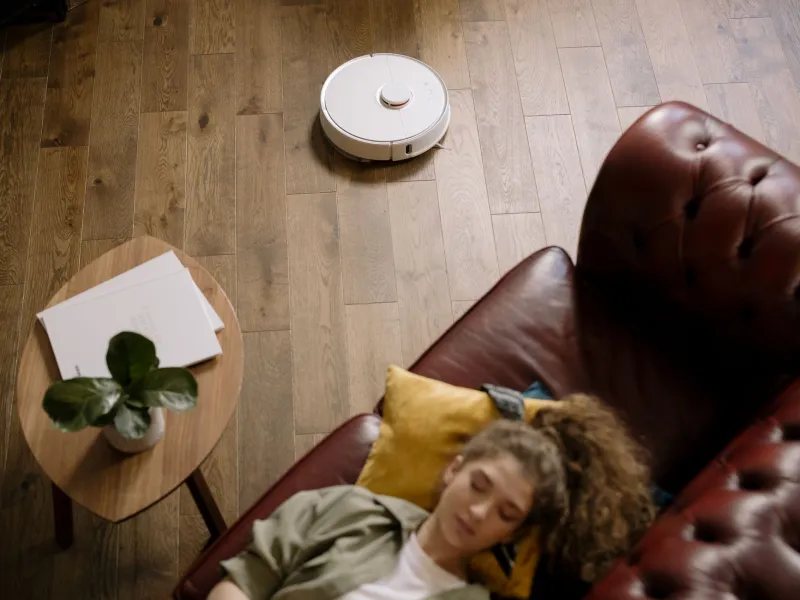
The robot vacuum has completed its transition from novelty to household staple in American homes, and the market has responded accordingly. Walk through any Best Buy or scroll through Amazon's appliance section and you will encounter a dizzying array of models promising laser navigation, self-emptying bases, mop-and-vacuum combinations, and machine learning that supposedly adapts to your home's layout over time. The price range is equally staggering — from $149 to north of $1,500.
At R10 Review, we believe that enthusiasm for technology should be grounded in performance data. So we sourced six robot vacuums representing distinct price tiers and ran them through a structured six-week evaluation in a 2,200-square-foot home in the Atlanta suburbs — a layout that includes hardwood floors in common areas, low-pile carpet in two bedrooms, ceramic tile in bathrooms and the kitchen, two medium-sized dogs, and the kind of furniture arrangement that creates legitimate navigational challenges for autonomous machines.
The models tested were: iRobot Roomba Combo j9+ ($1,099), Roborock S8 Pro Ultra ($1,599), Eufy RoboVac X8 Pro ($599), Shark IQ Robot XL ($349), Wyze Robot Vacuum with LiDAR ($249), and Ecovacs Deebot N8 Pro ($299).
Navigation and Mapping: Separating Smart From Merely Adequate
Navigation quality has the most direct impact on daily usability, and this is where the clearest performance tiers emerged. Both the Roborock S8 Pro Ultra and the Roomba Combo j9+ demonstrated mapping precision that genuinely earned the word "intelligent." Both units completed full-home mapping runs within two sessions, generated accurate floor plans within their companion apps, and — critically — resumed cleaning from their interrupted positions after returning to base to recharge. This feature sounds minor until you realize that less sophisticated models simply restart their entire cleaning cycle after recharging, wasting significant time and battery.
The Wyze Robot Vacuum, despite carrying a LiDAR sensor at its $249 price point, produced mapping that required regular correction. Furniture legs occasionally confused its path planning, and it developed a persistent habit of attempting to clean beneath a sectional sofa with insufficient clearance — a behavior that persisted across multiple sessions despite the area being excluded in the app settings.
The Eufy X8 Pro fell in a credible middle position: mapping was reliable after three full runs, and the unit navigated our test home's layout competently, though its obstacle detection struggled with darker-colored objects on hardwood floors — a known limitation of some optical sensor configurations.
Pet Hair Performance: The Metric That Matters Most in American Homes
Approximately 67 percent of American households include at least one pet, according to the American Pet Products Association. Pet hair performance is therefore not a niche consideration — it is a primary purchasing driver for the majority of buyers in this category.
We introduced a standardized amount of collected dog hair to a 10-by-10-foot hardwood section and a matching carpeted area before each weekly test run. Results were measured by weight of debris collected.
On hardwood, every model performed adequately, with differences in collection amounts falling within a margin that most homeowners would not notice. Carpet performance was where meaningful separation emerged. The Roborock S8 Pro Ultra's roller brush design and 6,000 Pa suction handled the low-pile bedroom carpet with impressive thoroughness. The Roomba j9+ was nearly its equal. The Shark IQ Robot XL, at $349, surprised us with carpet performance that meaningfully outpaced its price positioning — its dual brush roll system extracted embedded pet hair from carpet fibers more effectively than the Eufy, which costs $250 more.
The Ecovacs N8 Pro and Wyze lagged in carpet pet hair extraction, leaving visible debris trails that required a second pass to address — a limitation that erodes the time-saving value proposition of the entire category.
Self-Emptying and Mopping: Features Worth Paying For Versus Features Worth Skipping
Self-emptying bases have become a standard feature marketing point, but the execution varies considerably. The Roborock and Roomba bases both operated reliably throughout our testing period, with the Roborock's base design proving marginally quieter during the emptying cycle — a relevant consideration for households where the robot runs on a schedule during work-from-home hours.
Mopping functionality warrants careful scrutiny. The Roborock S8 Pro Ultra's mopping system — which lifts the mop pad when transitioning from hard floors to carpet — is a legitimate engineering achievement that produced noticeably cleaner tile and hardwood surfaces when combined with the cleaning solution recommended by the manufacturer. The Ecovacs N8 Pro's mopping attachment, by contrast, functions more as a light dampening mechanism than true scrubbing. It reduced surface dust on tile but left no discernible improvement on dried spills that had been present for more than 24 hours.
For consumers considering a combined mop-vacuum unit, our honest recommendation is to evaluate mopping capability as a supplement to regular vacuuming rather than a replacement for manual mopping of high-traffic kitchen areas.
Noise Levels and Household Disruption
Robot vacuums are not quiet appliances, and marketing language that implies otherwise should be approached skeptically. We measured decibel levels at maximum suction for each unit. The Wyze was the quietest at 64 dB, making it the most compatible with running during conference calls or while children nap. The Roborock reached 72 dB at maximum suction — comparable to a standard upright vacuum — though its scheduling flexibility and room-specific cleaning modes allow users to manage when and where it runs at full power.
Honest Tier-by-Tier Recommendations
Under $300 — Wyze Robot Vacuum with LiDAR: For renters, smaller homes, or households without pets, the Wyze delivers functional autonomous cleaning at a price that limits the stakes of the investment. Manage expectations around mapping consistency.
$300–$400 — Shark IQ Robot XL: The most significant value finding in our entire test. Carpet and pet hair performance that punches well above this price tier, with reliable navigation and a self-emptying base. For pet-owning households on a budget, this is the recommendation.
$500–$700 — Eufy RoboVac X8 Pro: Competent but difficult to recommend given that the Shark outperforms it in the metrics that matter most for a $250 price premium. Better suited for households prioritizing quiet operation and strong app integration.
$1,000 and Above — Roborock S8 Pro Ultra or Roomba Combo j9+: Both models justify their pricing for households with complex layouts, multiple floor types, and pets. The Roborock's mopping system is the better-engineered of the two. The Roomba earns its price through mapping reliability and its established ecosystem of accessories and support.
The Bottom Line
The robot vacuum category contains genuine technological progress alongside a substantial amount of marketing inflation. Our six-week evaluation confirmed that consumers do not need to spend $1,000 to access meaningful autonomous cleaning capability — but the $349 Shark IQ represents the true value ceiling for most American households rather than the $149 entry-level models that struggle to deliver consistent results.
For those with the budget and the floor plan complexity to justify premium investment, the Roborock S8 Pro Ultra is the most technically accomplished product we evaluated. For everyone else, the Shark IQ Robot XL is the most defensible purchase in the category — a finding we did not anticipate when we began testing, and one that speaks to the increasingly competitive nature of this market.