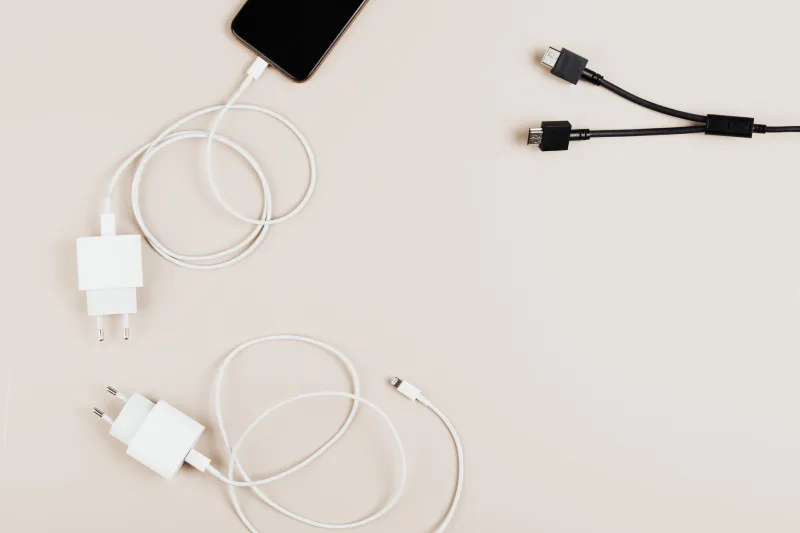
How Much Is That Extra Battery Worth? We Carried Ten Portable Chargers for 60 Days to Find Out
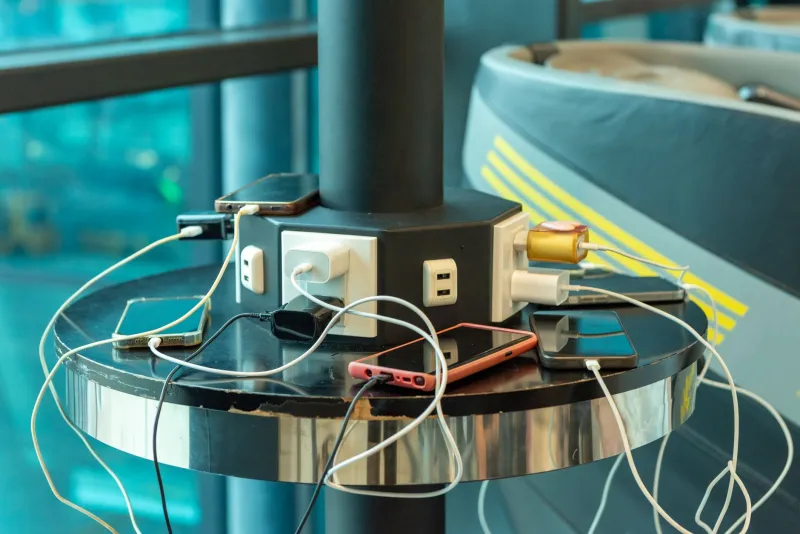
There is a seductive logic to portable charger marketing: more milliamp-hours means more charges, and more charges means more security. Buy the largest capacity you can afford, and you will never be stranded with a dead phone again. It is a clean, compelling argument — and it is incomplete in ways that matter considerably once the charger is in your bag and you are walking to the subway or through an airport terminal.
R10 Review spent sixty days testing ten portable chargers, ranging from compact 5,000mAh units to high-capacity 26,800mAh models, across three user profiles: a daily commuter in a mid-sized US city, a frequent domestic traveler averaging two to three flights per month, and a sedentary office worker who rarely leaves their building during the workday. The goal was not to rank chargers by specification but to answer a more useful question: for your specific life, what capacity and weight combination actually serves you best?
The Weight Problem Nobody Talks About
Portable charger marketing focuses almost entirely on what a device can give you — charges, watts, compatibility. It spends considerably less time on what the device takes from you, which is weight and volume in a bag you carry on your body.
The ten models in our test ranged from 148 grams to 668 grams. That upper figure is heavier than a standard 12-ounce can of soda. Carried in a backpack, the difference between the lightest and heaviest model in our test is 520 grams — more than a pound of additional load worn across the shoulders for hours at a time.
For the daily commuter in our study, this was not an abstract concern. After two weeks of carrying the highest-capacity models, she reported consistent shoulder fatigue and actively began leaving the charger at home on days when her schedule looked manageable without it. A charger that stays home is not providing any value. This is the core paradox of high-capacity portable power: the devices most capable of helping you are sometimes too burdensome to carry consistently.
Capacity Claims vs. Real-World Delivery
Every portable charger in our test delivered less usable charge than its rated capacity suggests. This is not a defect — it is physics. Voltage conversion losses, heat dissipation, and battery chemistry inefficiencies mean that a 20,000mAh charger does not deliver 20,000mAh to your device. In our testing, real-world delivery ranged from 58 percent to 71 percent of rated capacity depending on the model and output configuration.
This matters for purchase decisions. A consumer who buys a 10,000mAh charger expecting to fully charge a 4,500mAh smartphone twice will, in practice, achieve closer to 1.3 to 1.5 full charges. Adjusting expectations to reflect actual delivery rather than nominal capacity changes the capacity tier that makes sense for most users.
The practical threshold for a single-device user who wants one guaranteed full recharge plus a meaningful top-up is approximately 10,000mAh of rated capacity. Below that, delivery efficiency losses make the margin uncomfortably thin. Above that, the additional capacity serves diminishing returns for single-device users while adding weight linearly.
Three Users, Three Different Answers
The most instructive output from our sixty days of testing was how differently the three user profiles evaluated the same devices.
The daily commuter found the strongest satisfaction with compact models in the 10,000 to 12,000mAh range. These devices weighed between 200 and 250 grams, fit in a jacket pocket or small tote without difficulty, and provided sufficient capacity for the specific anxiety she was solving — a long workday with limited charging access and a phone that typically reached 20 percent battery by early evening. She did not need to charge a laptop. She did not need to charge multiple devices simultaneously. The smaller form factor meant she actually carried the charger every day, which multiplied its practical value.
The frequent traveler arrived at different conclusions. He routinely needed to charge a smartphone, wireless earbuds, and occasionally a tablet across travel days that stretched twelve to sixteen hours. For him, the higher-capacity models justified their weight because the use case genuinely demanded the capacity, and the charger was already going into a carry-on bag that he would be wheeling rather than wearing. The weight penalty was effectively neutralized by the travel context.
The office worker, perhaps predictably, found that she rarely used any portable charger during the workday because her desk provided adequate charging access. Her legitimate use case was weekend travel and occasional evenings out. For that profile, a small, affordable 5,000mAh unit that she could slip into a purse without noticing proved more valuable than any higher-capacity alternative — not because it offered more power, but because its negligible weight meant it was always available when the occasional need arose.
Charging Speed: The Underrated Variable
Capacity dominates the conversation around portable chargers, but charging speed deserves more attention than it typically receives. Among our ten test models, maximum output wattage ranged from 12W to 65W. In practical terms, this difference is substantial.
A 12W charger will add approximately 15 to 20 percent battery to a modern smartphone in thirty minutes. A 30W charger, under equivalent conditions, can deliver 40 to 50 percent in the same window. For a traveler with a thirty-minute layover, that gap is the difference between arriving at the next gate with a functional device and arriving with a marginal one.
High-wattage models typically cost more and, in some configurations, weigh more. But for users whose primary use case involves brief, intensive charging windows rather than overnight top-ups, prioritizing output wattage over raw capacity is the more rational trade-off.
What R10 Review Actually Recommends
After sixty days and three distinct user profiles, the editorial guidance is straightforward: purchase the smallest charger that reliably solves your specific problem, not the largest one you can rationalize buying.
For single-device daily commuters, the 10,000mAh tier at under 250 grams represents the optimal balance of capacity, weight, and everyday carry practicality. For multi-device travelers, the 20,000mAh tier with 30W or higher output justifies the added weight when the travel context mitigates the carrying burden. For light users with occasional needs, a pocket-sized 5,000mAh unit is likely sufficient and will actually be present when needed.
The most expensive portable charger in our test cost four times as much as the most affordable. The most capable was not the most useful. That distinction — between specification and genuine utility — is precisely the kind of analysis that should drive purchase decisions.